Over the past weeks, we organised three hands-on workshops across Belgium — in Zwijnaarde, Kontich, and Winksele — for orthodontists, dentists, dental assistants, and dental technicians who want to take the step toward digital workflows today. More than a demo. Doing, testing, and applying — so participants could immediately see what 3D printing can mean for their practice.
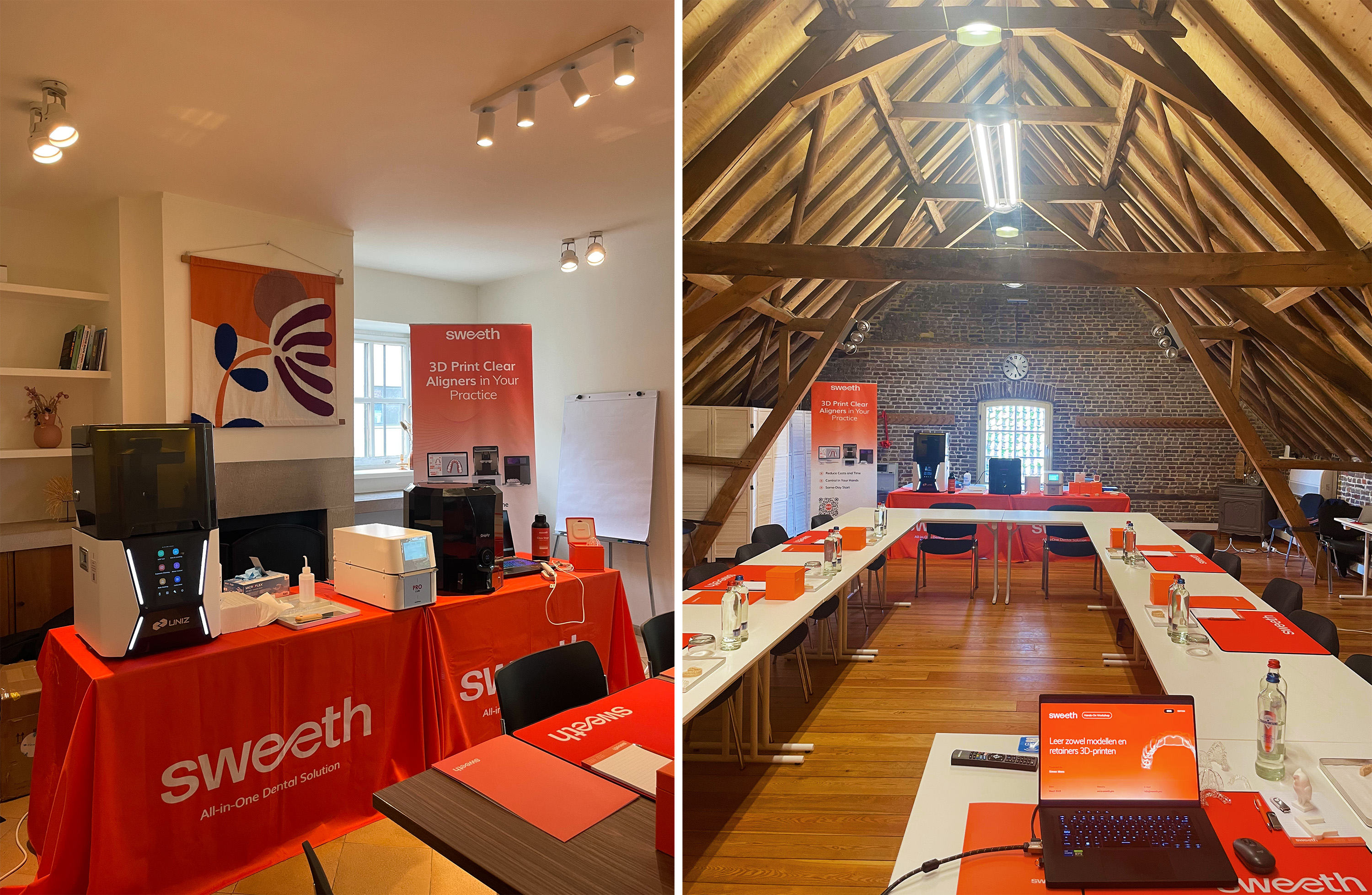
Each workshop ran as a full half-day session — from 10:15 to 15:30 — with three distinct parts designed to take participants from zero to confident in one afternoon.
The morning started with an introduction to the digital workflow: from scan to print, explained clearly and without unnecessary jargon. Not a sales pitch — a practical overview of how the technology works and where it fits into a real dental practice.
The second part of the day is where it got interesting. Participants didn't just watch — they built their own case, step by step, guided by our expert. That meant uploading an intraoral scan, working through the design of models and retainers, and seeing how AI supports the process — from setting up the design to preparing the file for the printer.
Questions came up naturally throughout. That's exactly the format we designed for: a Q&A woven into the workflow, not bolted on at the end.
After a lunch break, the afternoon session focused on the printing workflow itself. Participants got a hands-on explanation of how the printer works, how to prepare and post-process prints, and what it takes to go from a finished design file to a physical retainer. Step by step, guided by our expert — until everyone held a finished retainer in their hands.
The focus across all three locations was consistent: what does this look like in your practice, from tomorrow? Understanding when 3D printing saves time, how to work with materials correctly, and how to integrate it into a daily routine without disrupting everything else.
Participants left with practical knowledge they could apply straight away — and a much clearer picture of what in-house 3D printing actually involves.
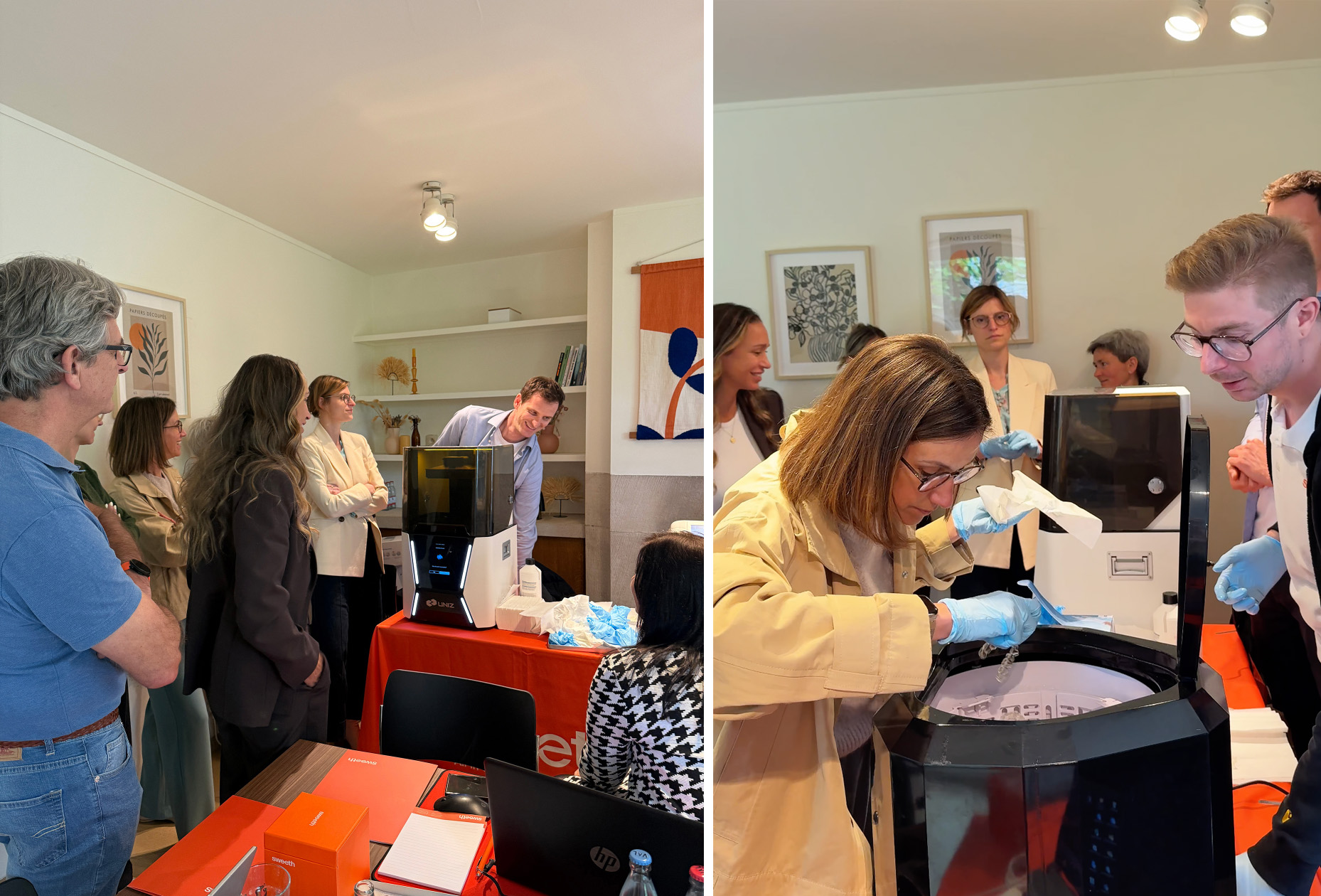
Three locations. Three groups of dental professionals ready to make the move to digital. The workshops confirmed what we already believed: the knowledge and the guidance were the missing piece — not the willingness.
That's exactly what Sweeth is here for — making 3D printing in dental practice genuinely accessible. Not just as a concept, but as something you walk away from knowing how to do.
More workshops are coming. Want to be there?
May 29, 2026
Simon Meas
News
We completed three hands-on workshops in Belgium — where orthodontists, dentists, dental assistants, and dental technicians discovered the full 3D printing workflow from scan upload to finished retainer.

Sweeth offers complete 3D printing solutions for dental professionals to design and produce aligners, veneers, and custom dental appliances in-house—streamlining workflows with expert support.